We highly recommend the Fitbit Versa for a wide variety of styles and uses, the Garmin Vivosmart 4 for outdoor and hardcore athletes, and the Samsung Gear Fit2 Pro for high-tech, stylish fitness fans.Unlike the Samsung Gear Fit2 Pro, the Galaxy Watch pairs up with the Samsung Galaxy Watch app, which offers a more robust third-party app library. We much prefer this approach because it lets you track the way you want to track and with the apps you prefer.For an elegant-looking wearable, the Galaxy Watch comes stuffed with the fitness features you need to get your sweat on, like GPS and a heart rate monitor. All that said, though, we’d be reluctant to do any hardcore lifting or outdoor adventuring with it for fear of scratching the watch face. Besides, it’s just too pretty for the rugged life.
Fitbit Versa
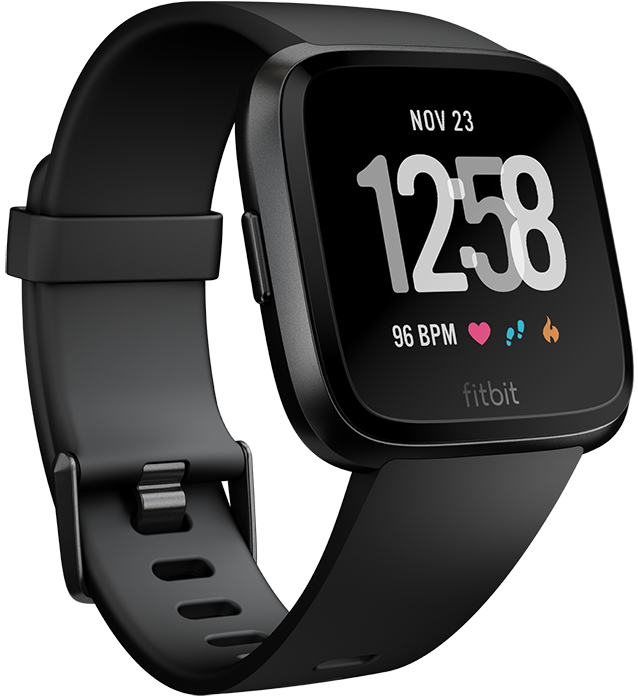
The first thing we noticed about the Versa is that it looks like an Apple Watch. But this fitness tracker lacks the Apple Watch’s steep price tag and still comes with plenty of features like a color screen, heart rate monitor, and a music player. We’re stoked.Swapping out the Versa band isn’t as easy as some other Fitbit models we’ve seen. You’ll need fingernails to push the tiny pin down and back to get the strap free. Even with fingernails, we struggled for a good five minutes to get it off.Swapping out the band aside, the Versa is the perfect blend of fitness tracker and smartwatch. You can check texts, calls, and notifications while eyeing the heart rate monitor as you jog down the sidewalk.
Fitbit Charge 3
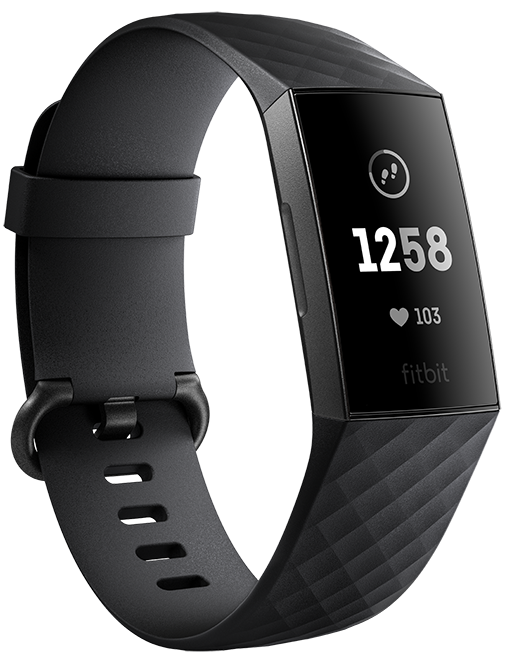
The Fitbit Charge 3 gives the Charge line a touchscreen and improved ergonomics without sacrificing its core competency of being an outstanding fitness tracker. It tracks 15 types of workouts, can dive 50 meters into the water, gets seven days of battery life, and does notifications from your iPhone or Android device. It’s a truly versatile product for a very reasonable price.Straight out of the box, the first thing you’ll notice about the Charge 3 is the band. It comes with a watch-style buckle, which is a nice upgrade from the simpler snap clasps on other Fitbit models.The Charge 3’s touchscreen is pretty responsive; you’ll need to swipe up or down to check various stats. There are also two buttons on either side of the screen you can press. It’s a little awkward pressing these to access the apps and settings, but it isn’t something we couldn’t get over.
Garmin Vivosmart 4

Pairing the Vivosmart took a few attempts—if you run into this issue, try taking your tracker off the charger and then plugging it back in to reboot it. Once we got it up and running, the Vivosmart quickly grew on us. Along with screen taps and swipes, it uses arm gestures to turn on. This is a nice feature if you can’t manage to tap the screen while running on the treadmill.One thing we’d change about the Vivosmart is the screen size. It’s just a tad too small, and we found it difficult to get our swipes and taps in just the right spot. But if you prefer a band that doesn’t get in the way, the Vivosmart’s slim design fits the bill.The feature that caught our interest most was Garmin’s Body Battery tracker. It measures your energy via indicators like heart rate variability, stress, and sleep quality. The idea is to identify when your body is at high energy levels and ready for a workout versus when you need rest and relaxation.
Samsung Gear Fit2 Pro

Setting up the Gear Fit2 Pro is simple. If you prefer, you don’t even need your phone to start tracking or check results. If you do decide to pair it with your phone, be prepared to download two separate apps: Samsung Health and Samsung Gear Fit. The Health app lets you track your exercise, while the Gear Fit app sets up your tracker and monitors battery life, storage capacity, and RAM.Speaking of storage, the Gear Fit2 Pro comes with a music player. If you have a Wi-Fi connection, you can sync the fitness tracker to your computer or phone and download those high-tempo, bass-dropping songs that keep you amped up during your workouts.We liked how responsive the Gear Fit2 Pro’s screen is. Quick taps and button presses let us access everything from the heart rate monitor to the music player—and the button placement felt less awkward than the Fitbit Charge 3’s. Because you can track every location, rep, and step without the Samsung app, you don’t need your phone to tag along to get accurate GPS reads of your cross-country trek.
Garmin Vivosport

The Vivosport isn’t as fancy as the Samsung Gear Fit2 Pro, but you’ll get the same number of features—if not more—for the same price. And where the Gear Fit2 Pro is large and sleek, the Vivosport is small and rugged. This is the fitness tracker we’d take on a hike through Utah’s Bryce Canyon.One drawback to GPS-enabled activity trackers is the huge drain on the battery. Not so much with the Vivosport—we found it charged quickly and held that charge for days. That’s perfect if you’re getting off the grid for a few nights camping under the stars.We also found the Vivosport’s slightly larger screen was much easier to interact with than the Vivosmart 4’s. More of our swipes and taps registered the first time, so we weren’t left urgently swiping and tapping in frustration.
 Best Fitness Tracker